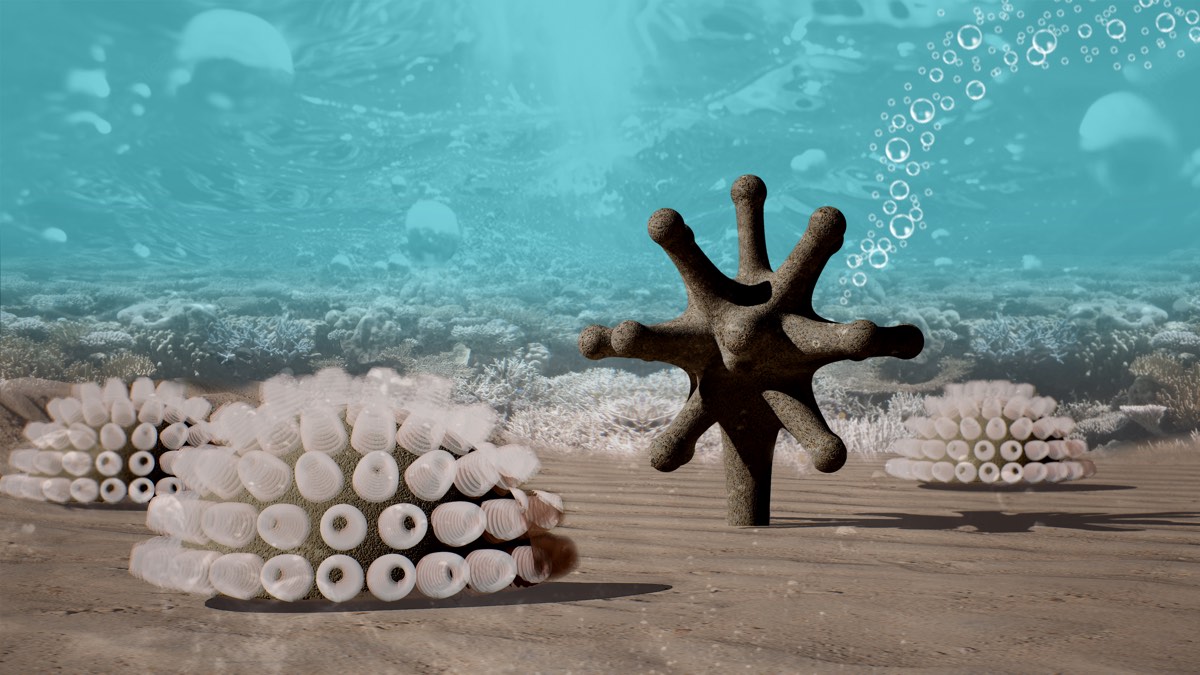
Blue Biont
Coral reef recovery system
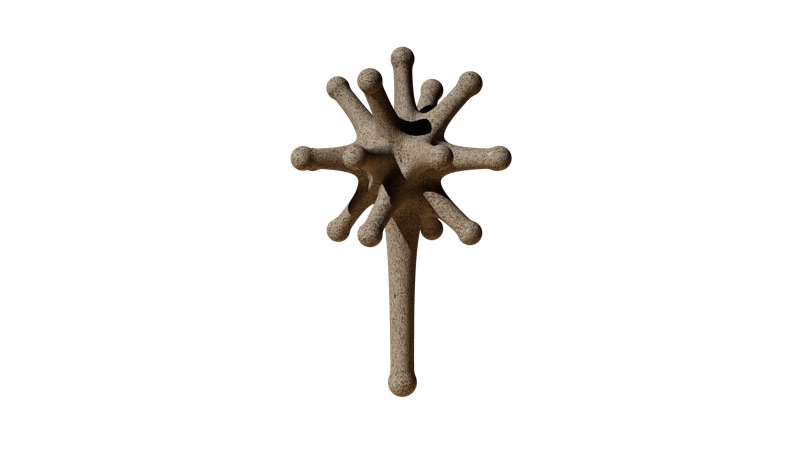
- Branching form
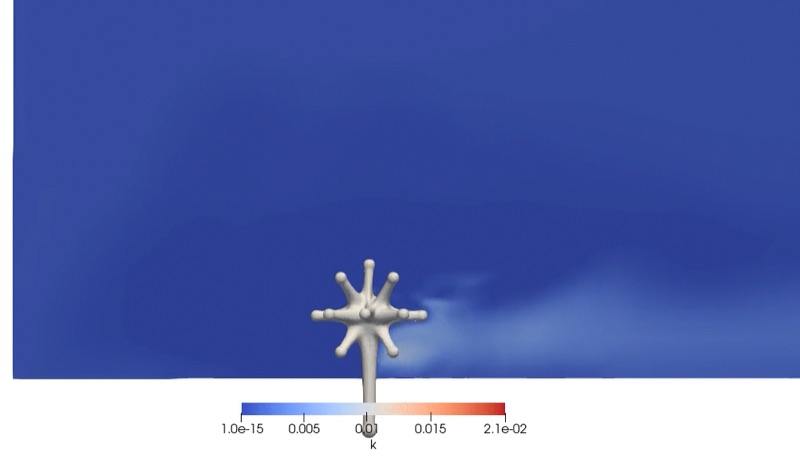
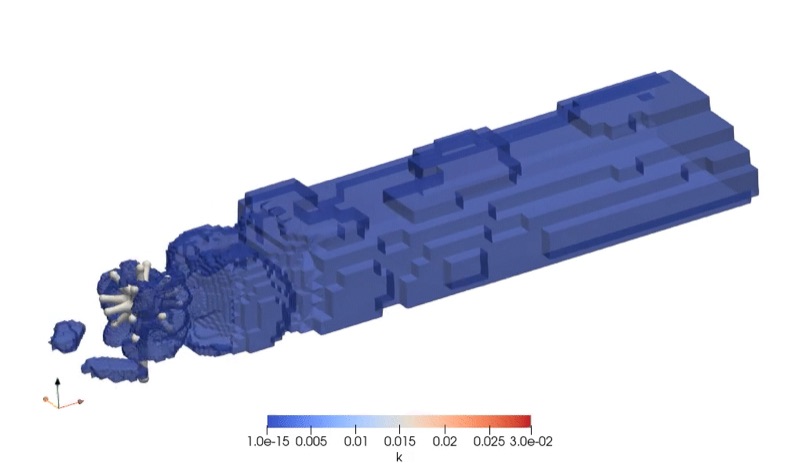
- adds drag, so the minerals spread further
- Alkalinity
- raised by dissolving minerals upstream of the reef
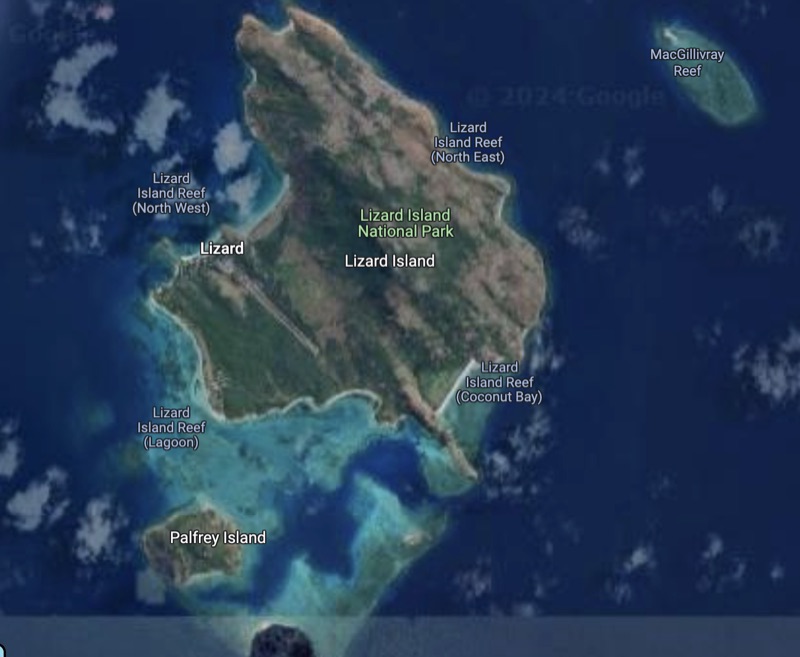
- Lizard Island
- Great Barrier Reef, the target site
A care package for reefs in crisis: a mineral dispersal device shaped like the corals it is trying to save.
01Dying from the inside
Ocean acidification dissolves coral skeletons faster than they can grow, and a weakened reef is more vulnerable to bleaching.
Ocean alkalinity enhancement works like an antacid. Minerals added to the water raise its pH and make carbonate available for coral to build with.
02Shaped like coral
The device carries the minerals and sits on the seabed upstream of the reef, so the current does the spreading.
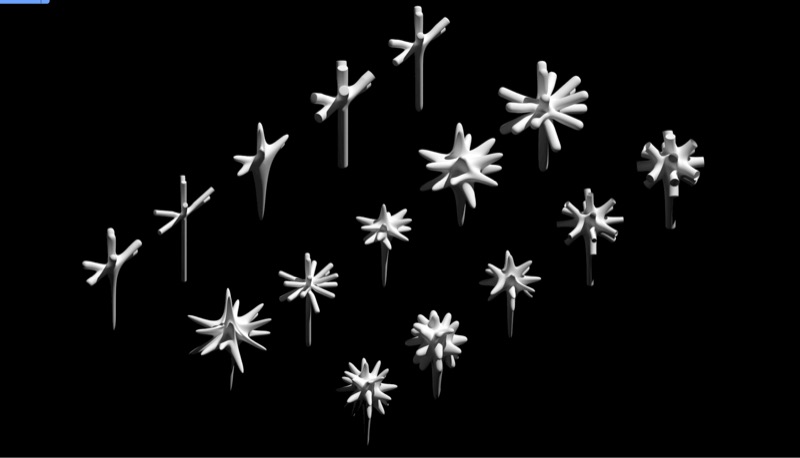
Its form comes from branching corals that grow in lower impact zones. The branches increase drag on the water. My part was the form: the geometry for the simulations and the physical prototypes.
03Does it reach
We tested the variations in simulation to find the form that disperses particles furthest. The wake leaves the device and spreads downstream. The simulations were produced with a PhD researcher at Imperial College London.
04Made and shown
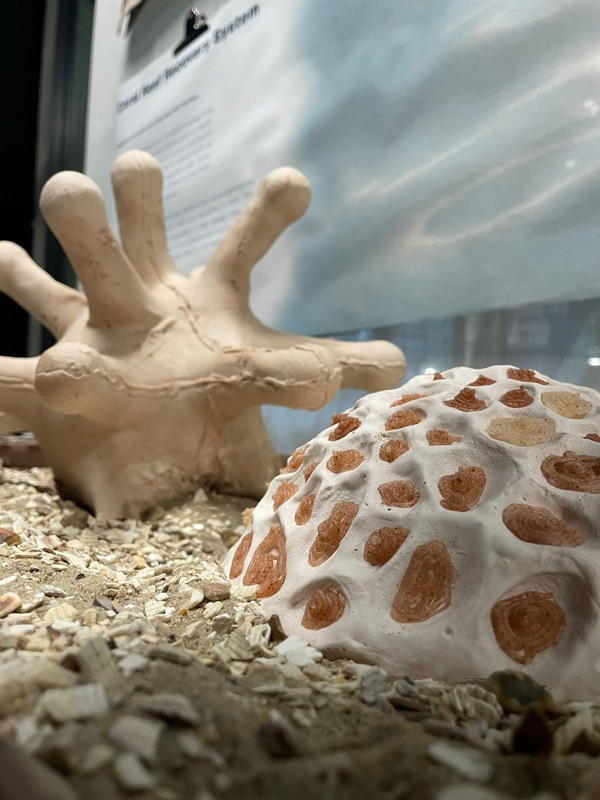
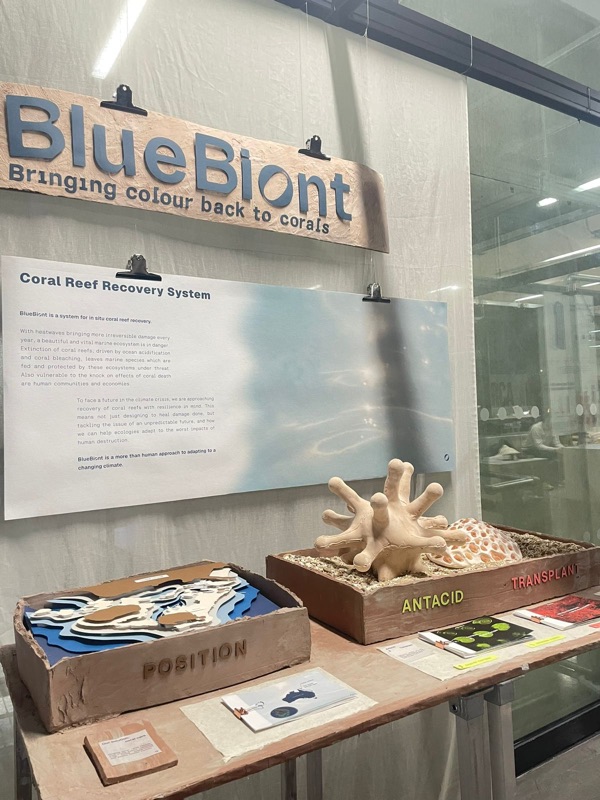
The form became 3D-printed prototypes and an exhibition model of the reef, with laboratory tests for pH and dissolution rate.
- Made
- Device form, 3D-printed prototypes, exhibition model of the reef
- Tested
- Fluid dynamics simulation. Laboratory tests for pH and dissolution rate
- Shown
- Royal College of Art exhibition, 2025
- Team
- Group project. Simulations with a PhD researcher at Imperial College London
- Tools
- Rhino, 3D printing, fluid dynamics simulation