Future Families
Circular furniture, pregnancy to play
- 8.9 kg CO₂
- less per cushion than polyurethane foam
- DFS
- industry partner, with a factory visit
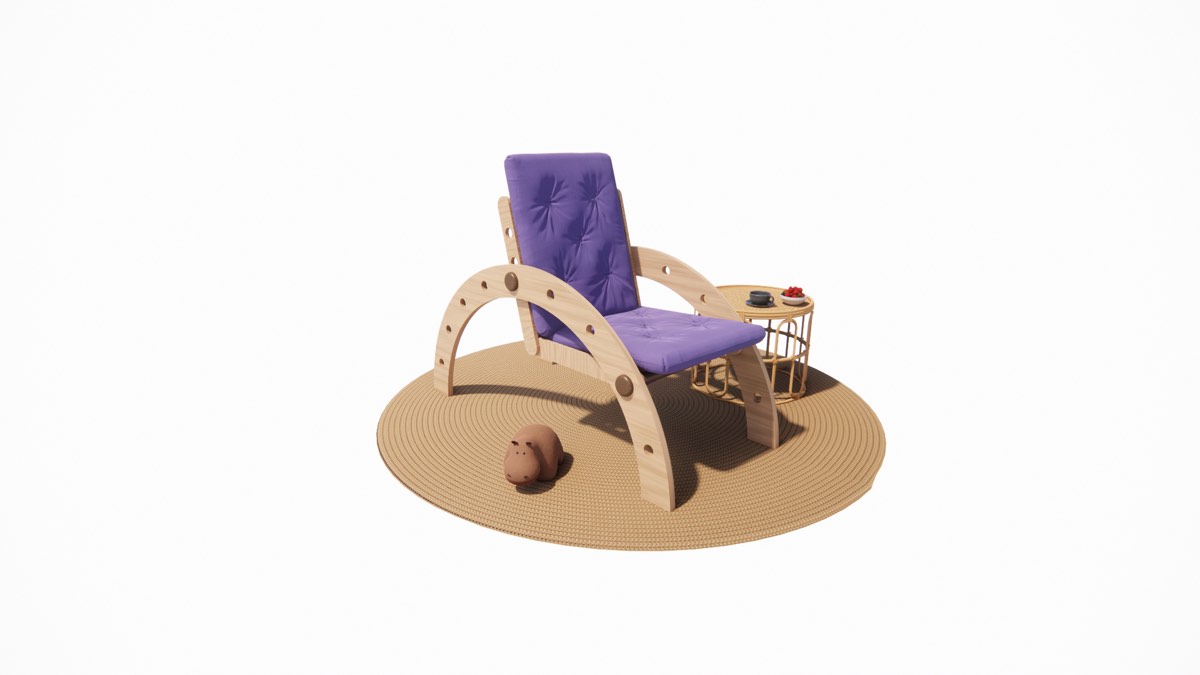
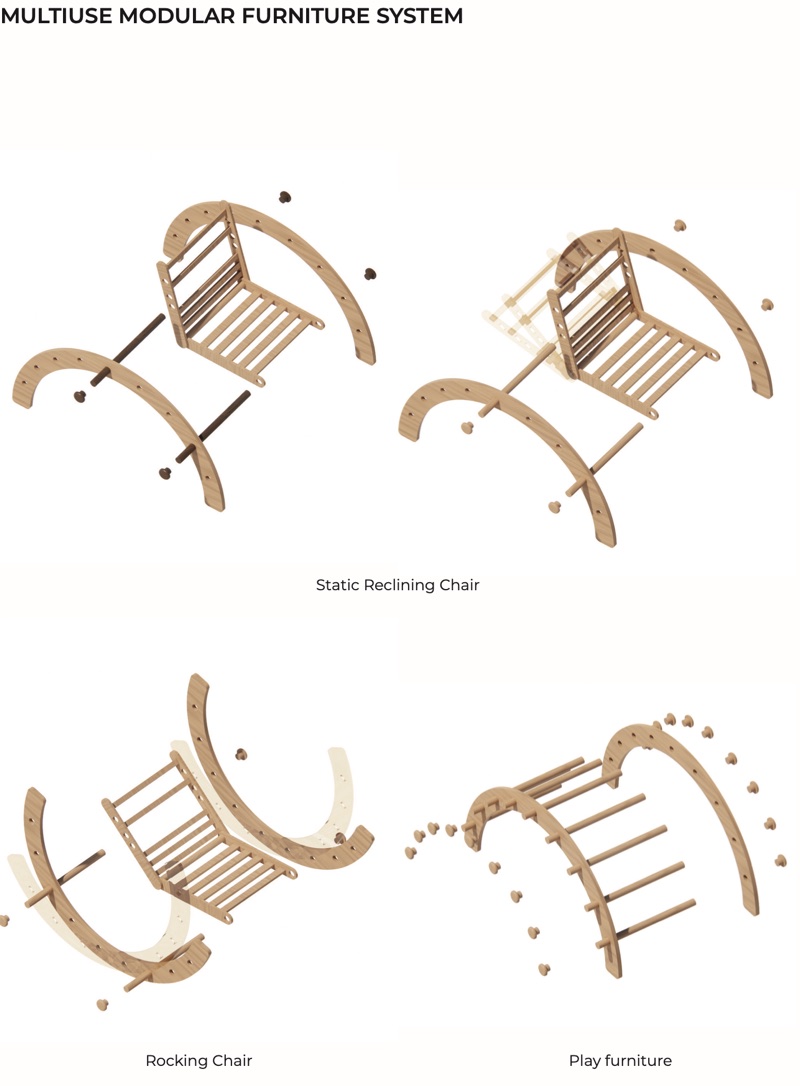
An armchair that reconfigures from a pregnancy recliner into a child’s climbing arch.
01The brief
DFS, the sofa maker, asked for a product with a full life cycle assessment behind it. We visited their factory, assessed a sofa, and set out to replace the materials that did the damage.
02One frame
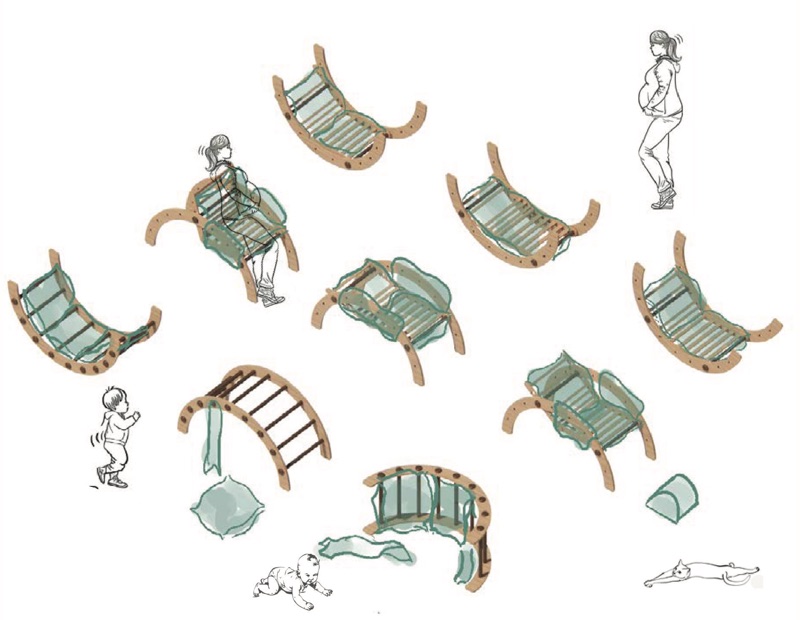
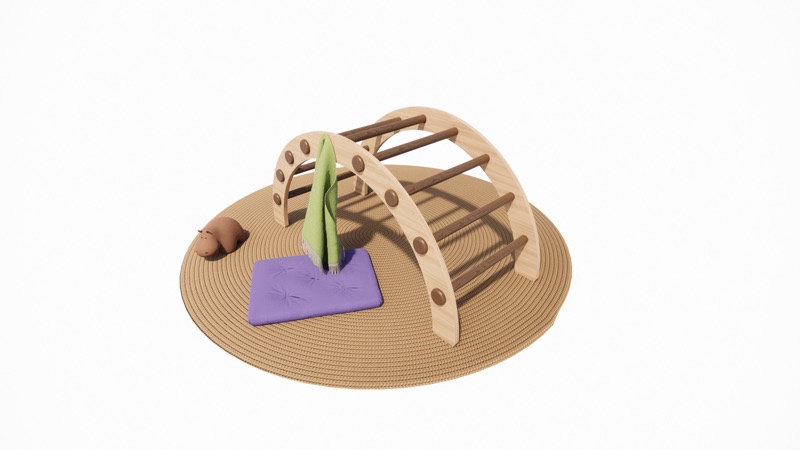
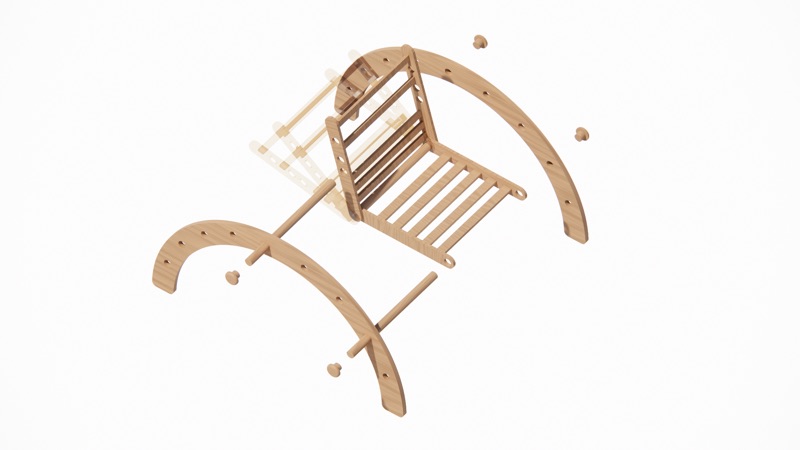
The same plywood parts and dowels build a reclining chair, a rocking chair and a climbing arch. It is designed to come apart, for repair and reuse.
03The cushion
Polyurethane foam carried the biggest footprint in the cushion. In its place: natural latex, British wool and hemp. Wool is a natural fire retardant.
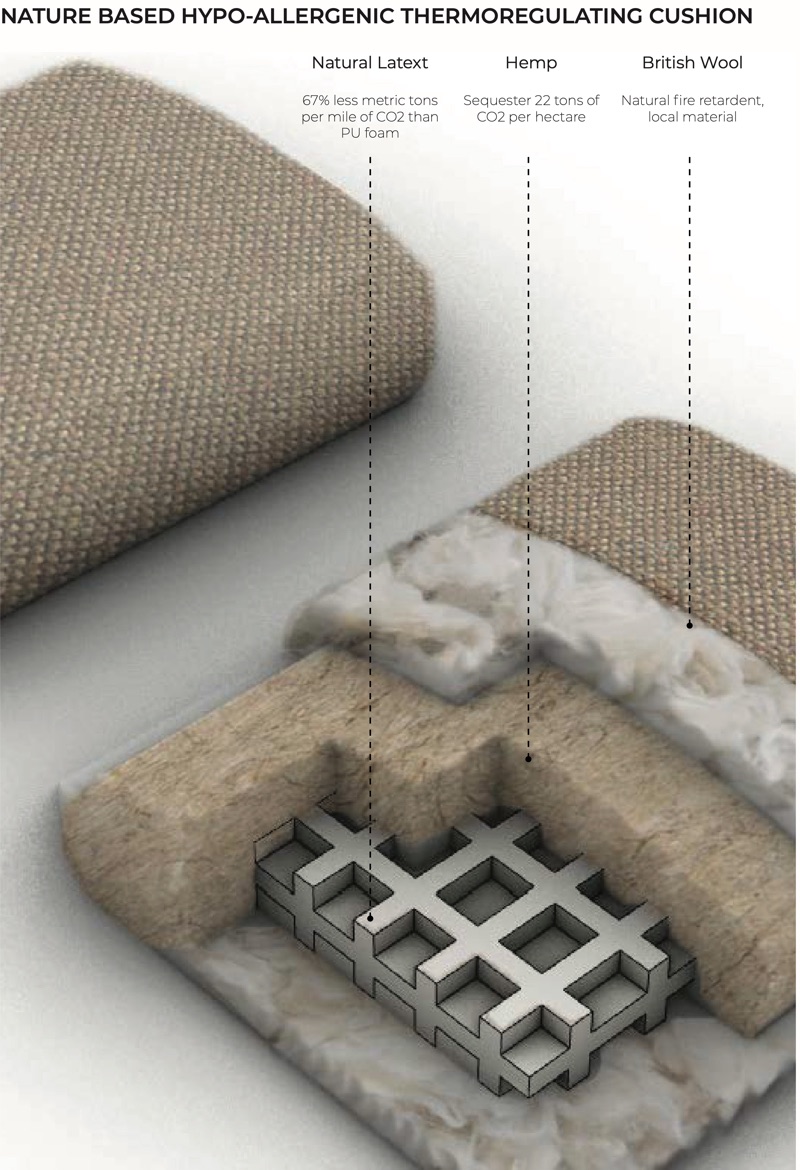
- Natural latex
- Cushion core. 1.7 kg CO₂ per cushion, against 10.6 kg for polyurethane foam. 67% less transport CO₂
- Hemp
- Cover. 1.36 kg CO₂ per cushion. The crop takes up 22 tonnes of CO₂ per hectare. 57% less transport CO₂ than velvet
- British wool
- Insulation, and a natural fire retardant. 0.099 kg CO₂ per cushion
- Eco-plywood
- Frame. −0.6 kg CO₂ net per frame. Expected to last 20 years
04Four generations
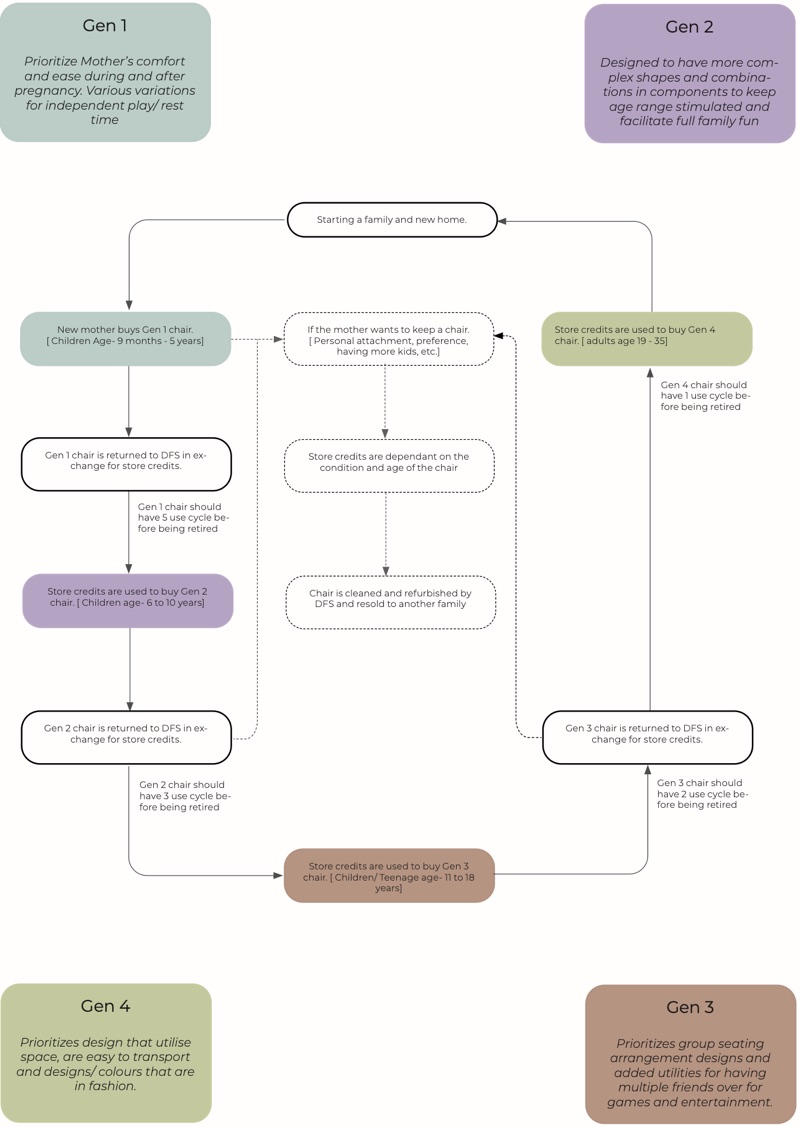
The chair is sold in four generations, one for each stage of family life. When a stage ends, it goes back to DFS for store credit, is refurbished and sold to another family.
- Gen 1
- Pregnancy to age 5. Five use cycles before it is retired
- Gen 2
- Ages 6 to 10. Three use cycles
- Gen 3
- Ages 11 to 18. Two use cycles
- Gen 4
- Adults, 19 to 35. One use cycle
- Return
- Store credit depends on the chair’s condition and age. DFS cleans and refurbishes it and sells it to another family