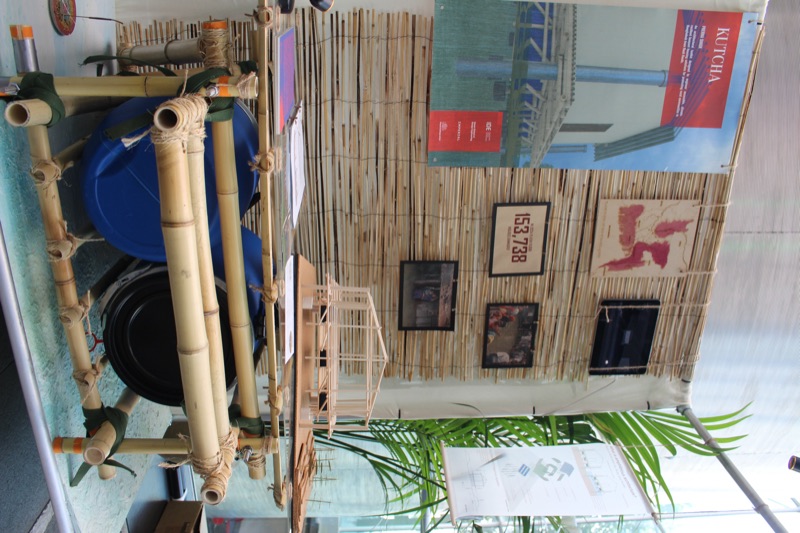
Kutcha
Buoyant housing toolkit
- 53,582
- homes destroyed in one 2024 monsoon
- < $45
- monthly household income
- Any height
- of flood. The house needs no prediction
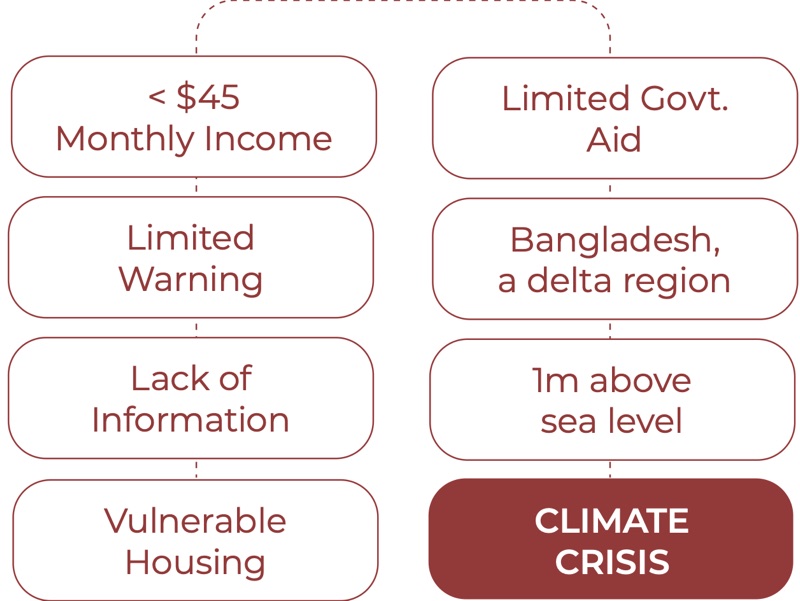
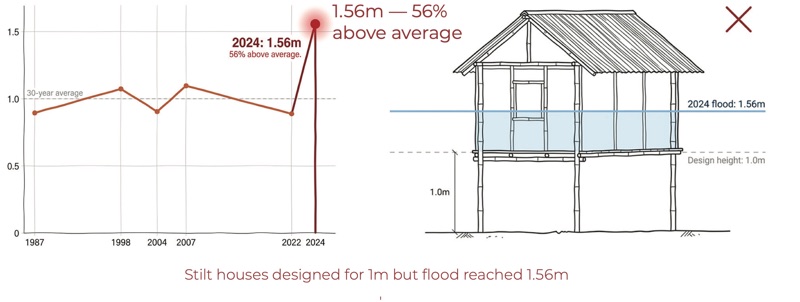
Stilt houses were designed for a 1 metre flood. In 2024 the water reached 1.56 metres. The families who lost everything earn less than $45 a month.
01The flood
One monsoon season in 2024 destroyed 53,582 homes in Bangladesh and damaged 153,738 more. The families who lost everything earn less than $45 a month.
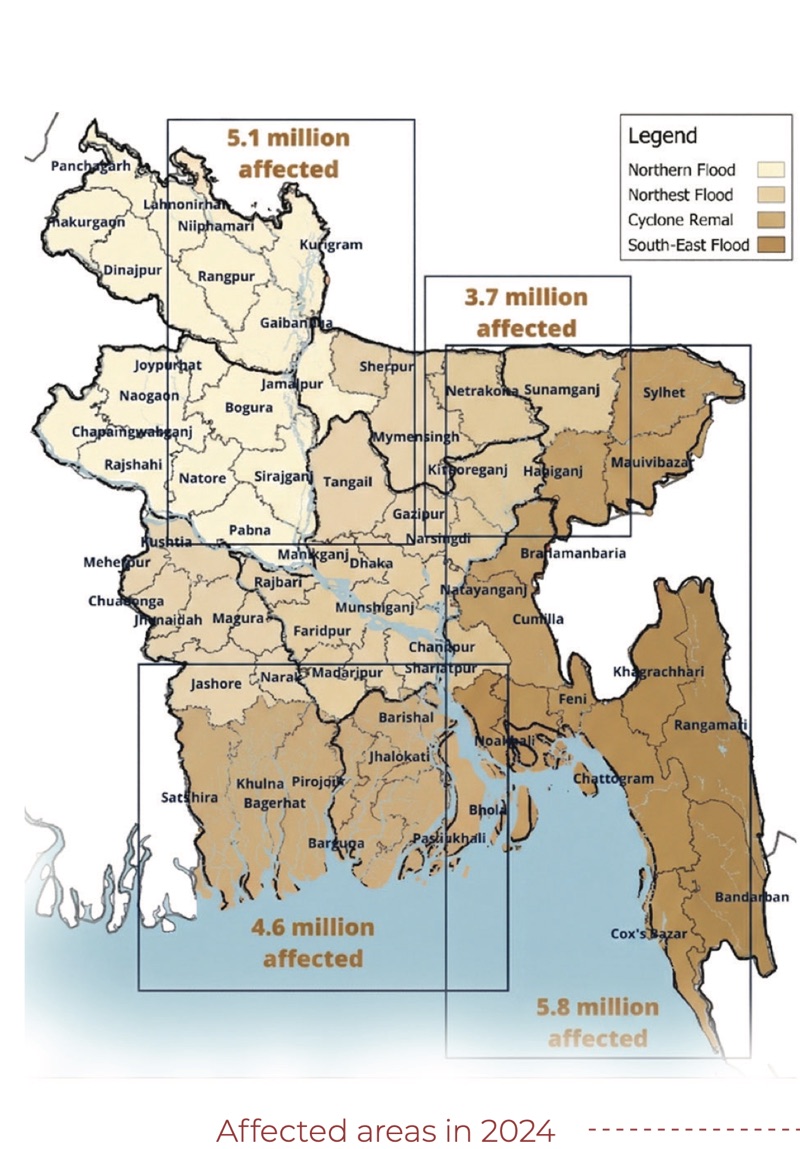
Stilt houses there are built for a 1 metre flood. In 2024 the water reached 1.56 metres. Flood peaks no longer follow the historical record, so any house built to a fixed height is a guess.
02The idea
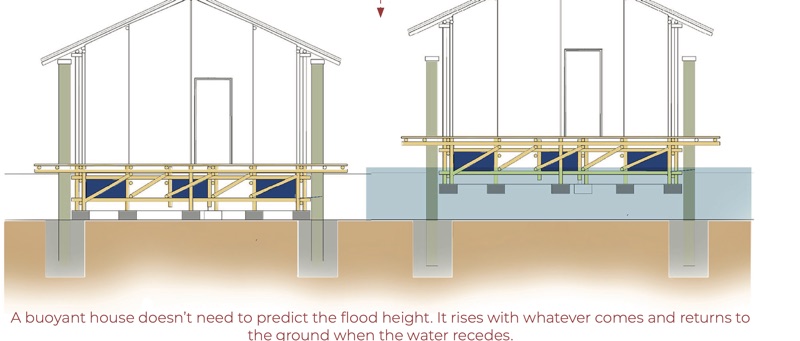
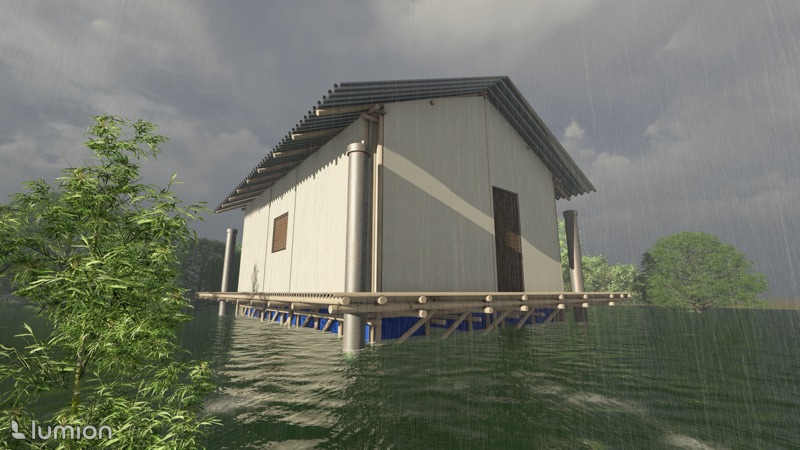
Stop guessing the height. A house that floats rises with whatever comes and settles back onto its footings when the water goes.
03Who I asked
- Apurba Swati Mehboob UN Development Programme, Bangladesh
- AA K M Zahirul Alam Shelter Cluster Coordinator, IFRC, Bangladesh
- Wouter Buytaert Professor of Hydrology and Water Resources, Imperial College London
- Asim Waqif Architect and bamboo artist, India
- Nishchal Pradhan Head of Innovation, Base Bahay Foundation
- Ruhul Abdin Architectural designer, Bangladesh. Through him I reached carpenters and masons in flood-affected districts, who checked the material list against what is available, affordable and buildable there.
Flash flood peaks in Bangladesh are non-stationary. You can’t design to a historical average any more.
Bamboo is only as strong as how it’s cut, cured, and joined. Get those three right and you don’t need steel.
04How it is built
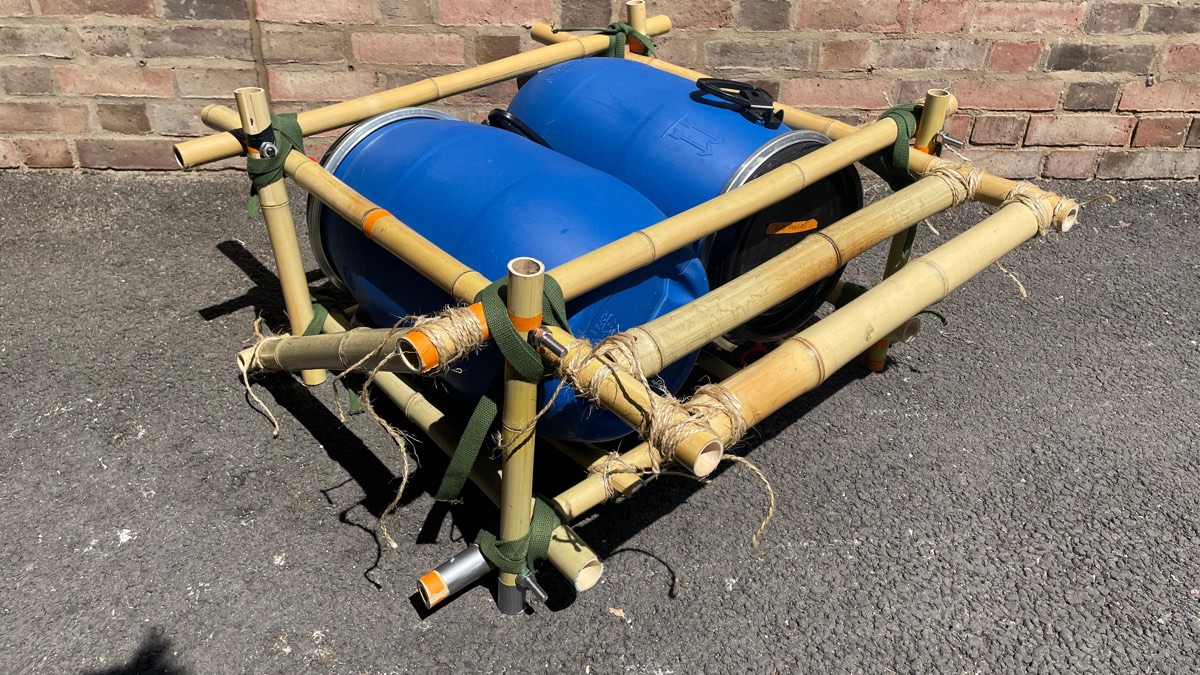
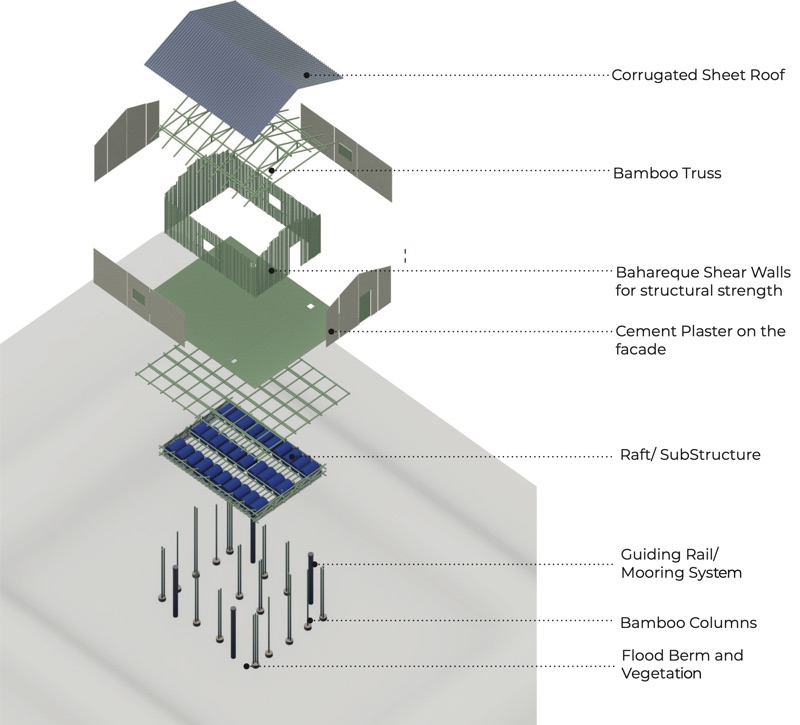
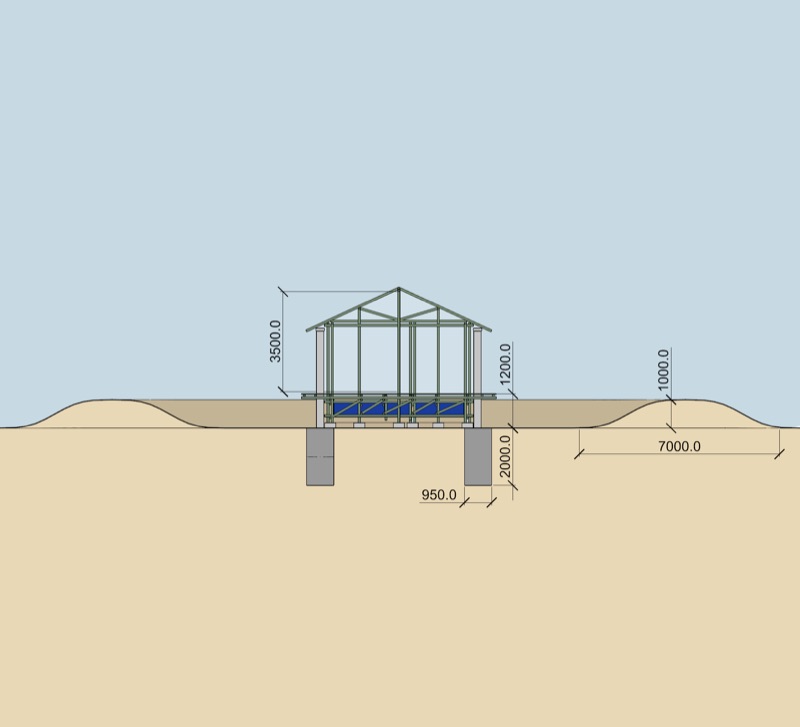
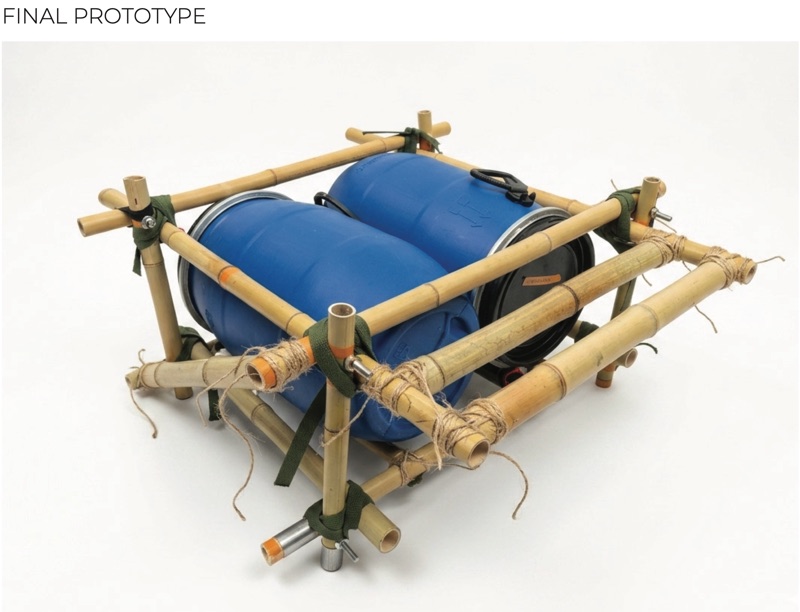
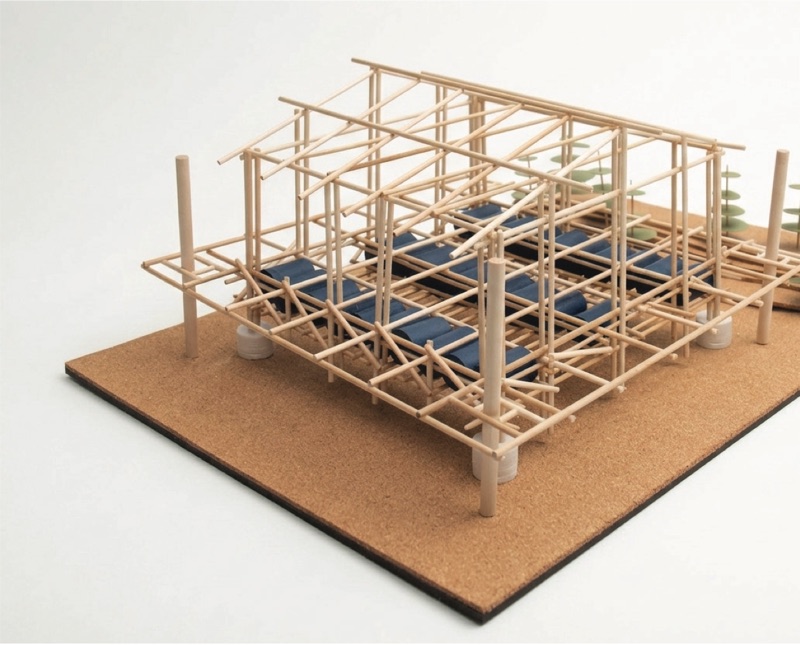
A bamboo frame sits on a raft of HDPE barrels. Guide posts set in concrete footings keep it in place as it rises. The walls are bahareque with cement plaster. A planted earth berm slows the water before it arrives.
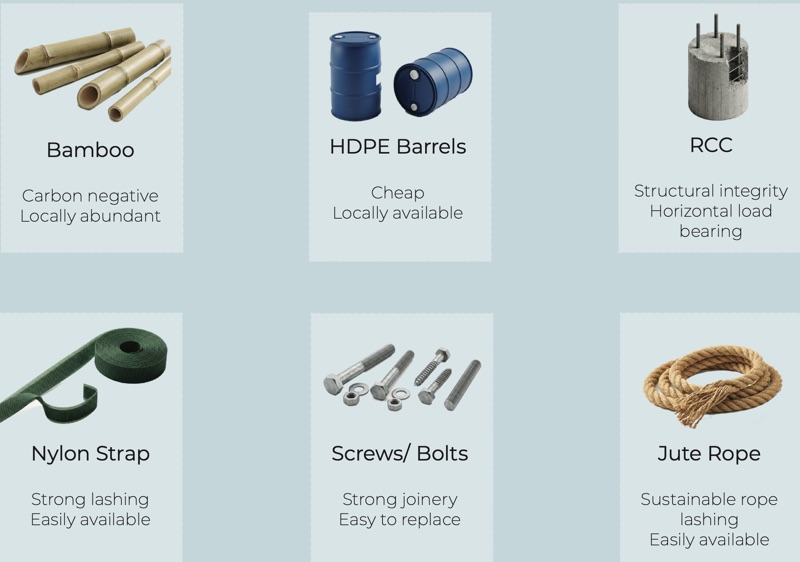
- Bamboo
- Frame, truss and columns. Carbon negative and grown locally
- HDPE barrels
- The raft. Cheap and easy to find locally
- Reinforced concrete
- Footings only. Anchors the guide posts and takes horizontal load
- Nylon strap
- Lashing. Strong and easy to find
- Screws and bolts
- Joinery. Strong, and easy to replace
- Jute rope
- Lashing. Sustainable and easy to find
- Earth berm
- Planted, 1 metre high and 7 metres wide, to slow the water before it reaches the house
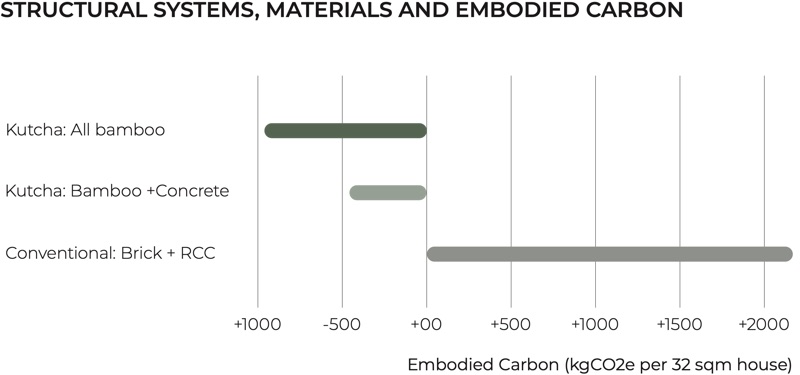
The same house in brick and reinforced concrete is carbon positive. Kutcha, in bamboo with concrete footings, comes out at −421 kgCO₂e.
05What failed
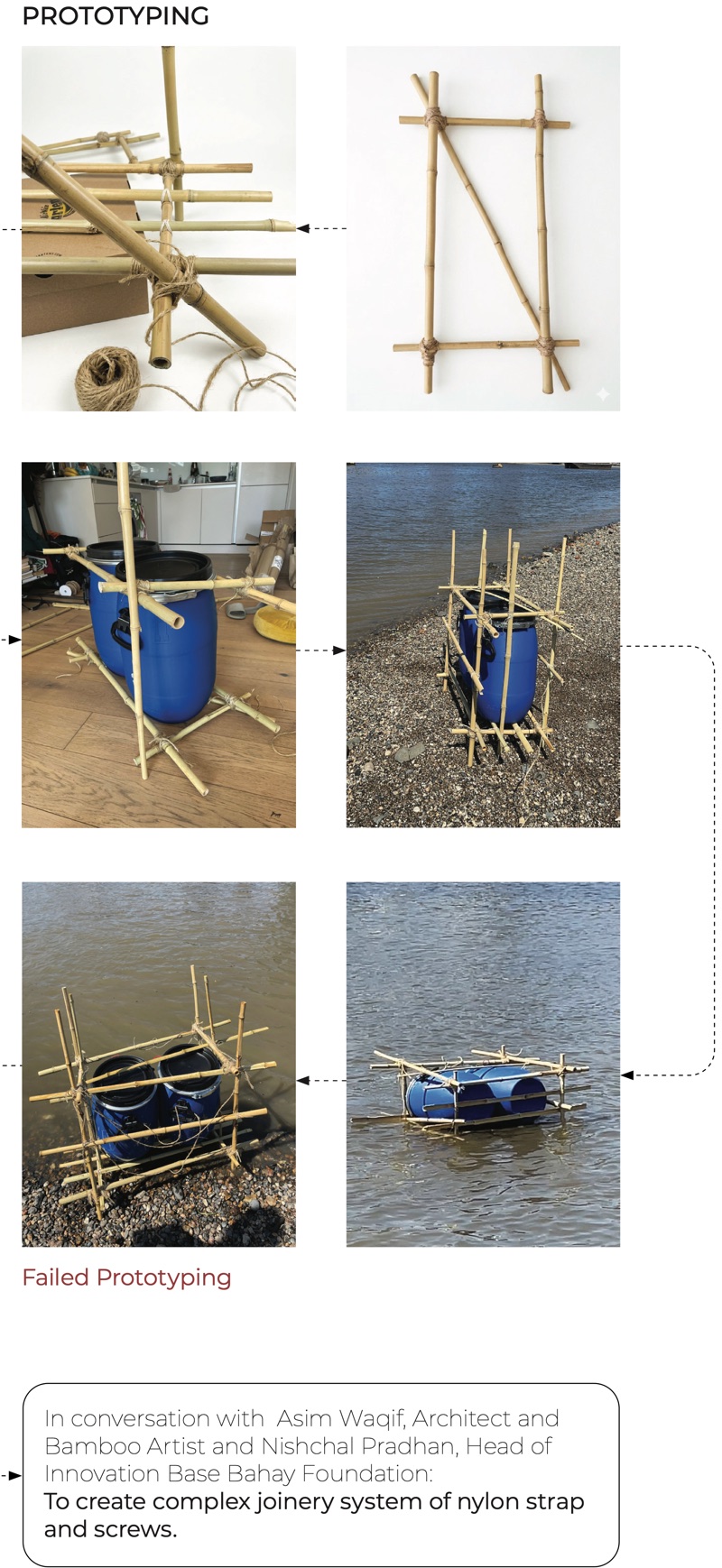
The first rafts were lashed with jute rope alone, and tested on the Thames foreshore. They failed. After talking it through with Asim Waqif and Nishchal Pradhan, the joints changed to nylon strap and screws. That is the raft at the top of this page.
06What it became
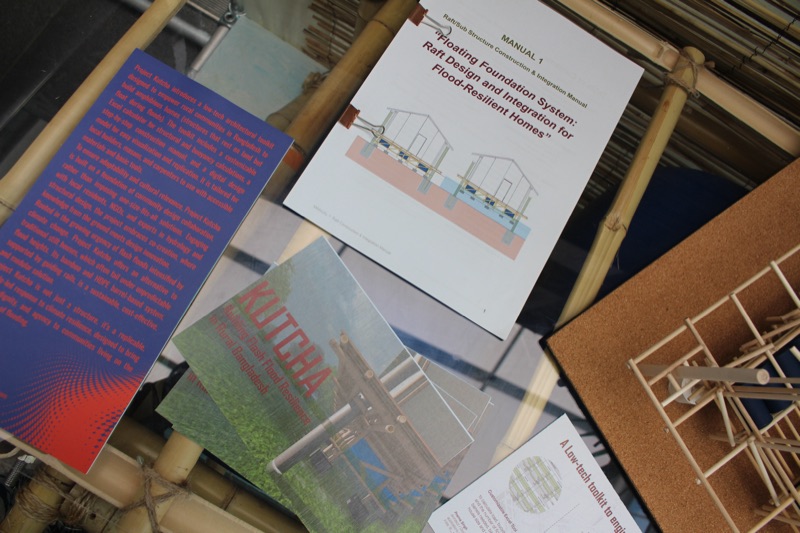
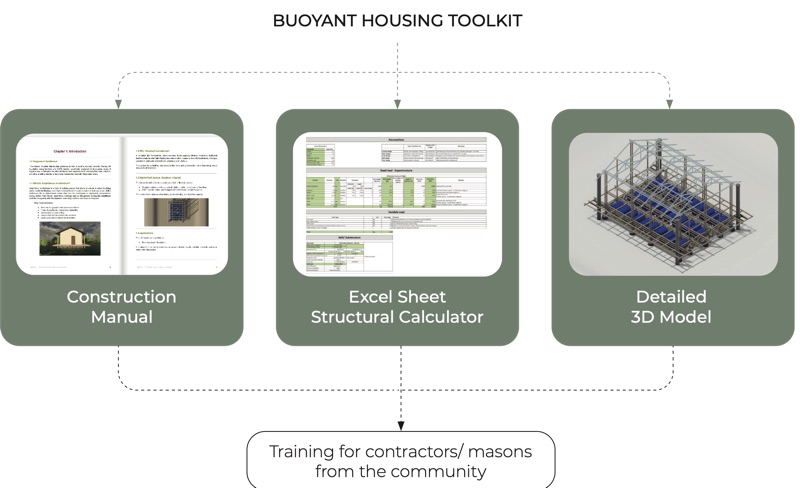
Not one house but a toolkit, so families can build their own with local carpenters and masons.
- Toolkit
- Construction manual, Excel structural calculator, detailed 3D model, training framework for local contractors and masons
- Prototypes
- Ten
- Materials
- Bamboo, HDPE barrels, reinforced concrete footings, nylon strap, screws and bolts, jute rope
- Embodied carbon
- −421 kgCO₂e per 32 square metre house
- Shown
- Royal College of Art and Imperial College London show, 2025
- Recognition
- Shortlisted, Prototypes for Humanity, Dubai, 2025
- Tools
- Rhino, AutoCAD, Enscape