Unsound
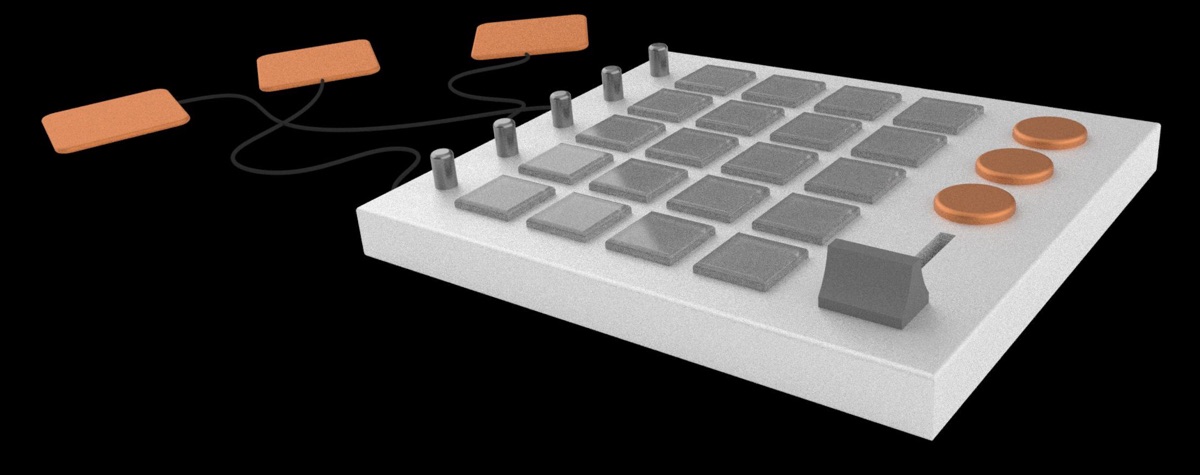
Tactile rhythm sequencer
- 4 steps
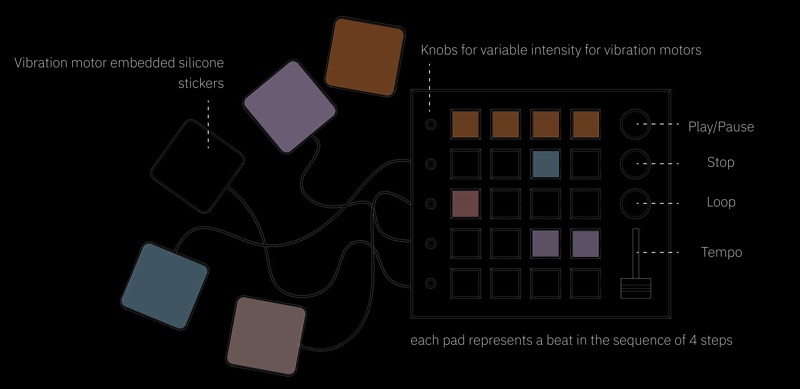
- each pad is one beat in the sequence
- Patches
- silicone, each with a vibration motor
Compose your rhythm in the world of no sound.
01Hearing is a form of touch
The Deaf DJ KIKAZARU has described arriving at a nightclub to play and being left “standing outside in the cold for a good 20 minutes” while staff worked out what to do with “that Deaf Guy”.
The percussionist Evelyn Glennie calls hearing a form of touch: you feel it through your body. Research at the University of Washington found that deaf people process vibration in the part of the brain others use for sound.
02Beat Sense
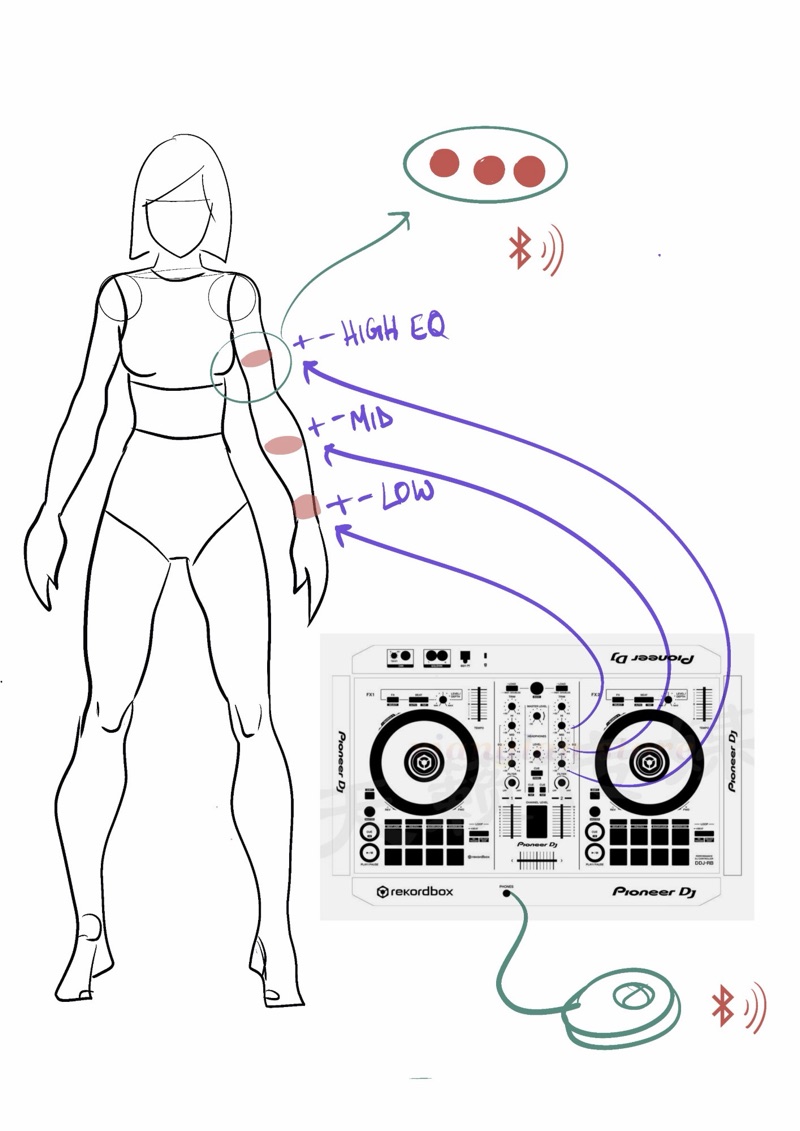
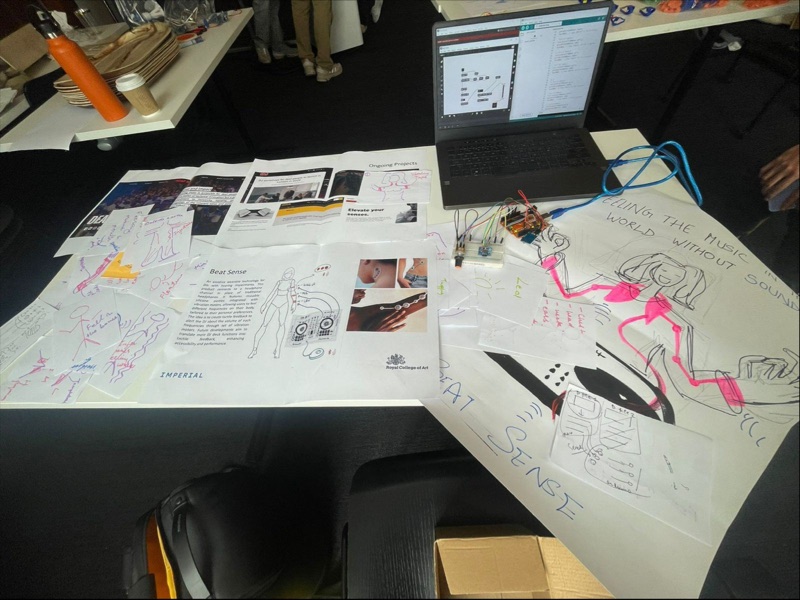
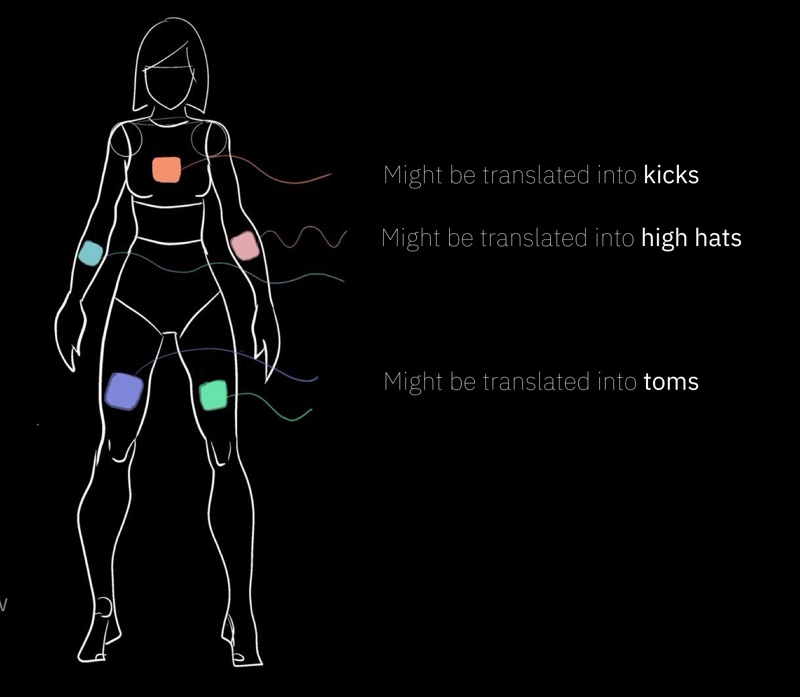
It began as Beat Sense, a wearable for DJs with hearing loss. It plugs into the headphone channel of a DJ controller, and patches on the arm let the DJ feel the low, mid and high frequencies.
03From feeling a mix to writing one
Unsound goes a step further: a tool for Deaf people to compose rhythm through vibration on the skin.
It works like a step sequencer. Each row of pads drives one silicone patch with a vibration motor inside. Each pad is one beat in a sequence of four steps. A knob on each row sets how strongly that motor vibrates. Play, stop, loop and a tempo fader run the sequence.
04Testing it
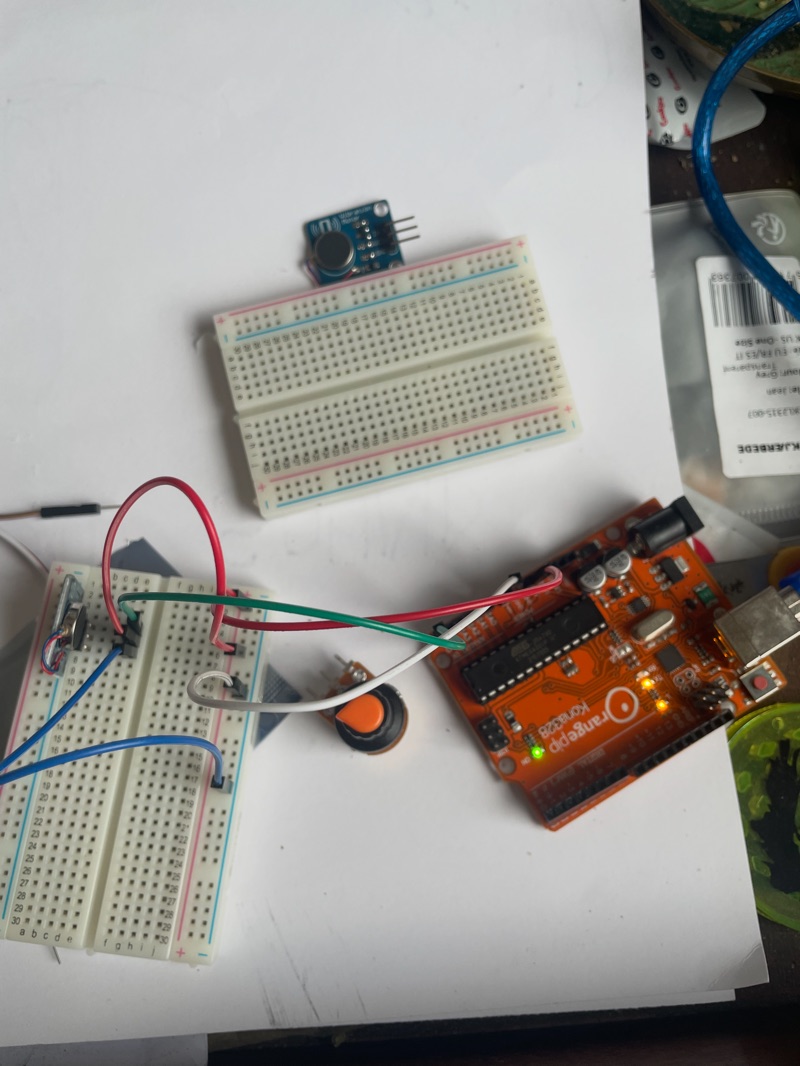
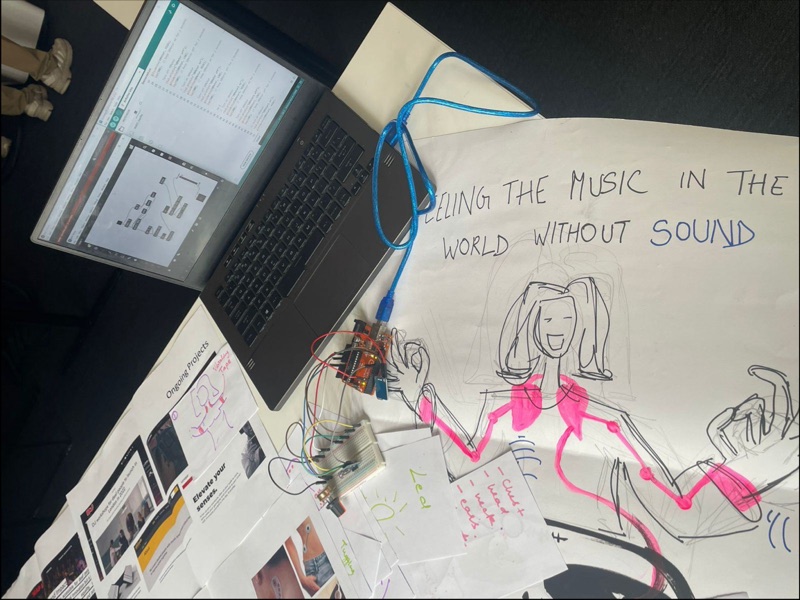
The demo runs on an Arduino. Its motors cannot make the ideal pulse shapes, so pulse width modulation stands in for them.
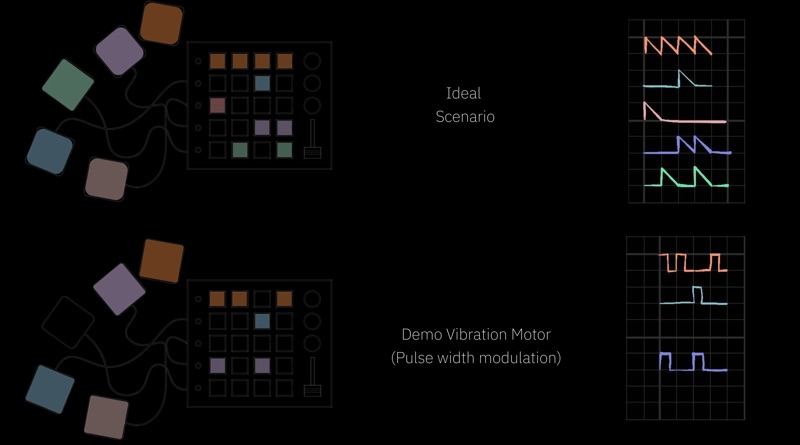
Testing the intensity knob. Sound on.
05Still to do
It needs validation and feedback from Deaf users, with Deaf West Theatre as the case user.